Where was the vacuum measured? Record the boundary first
A gauge at the pump and one at the system can describe different volumes. Record the measurement boundary before comparing.
HVAC Leak Check editorial team · References checked
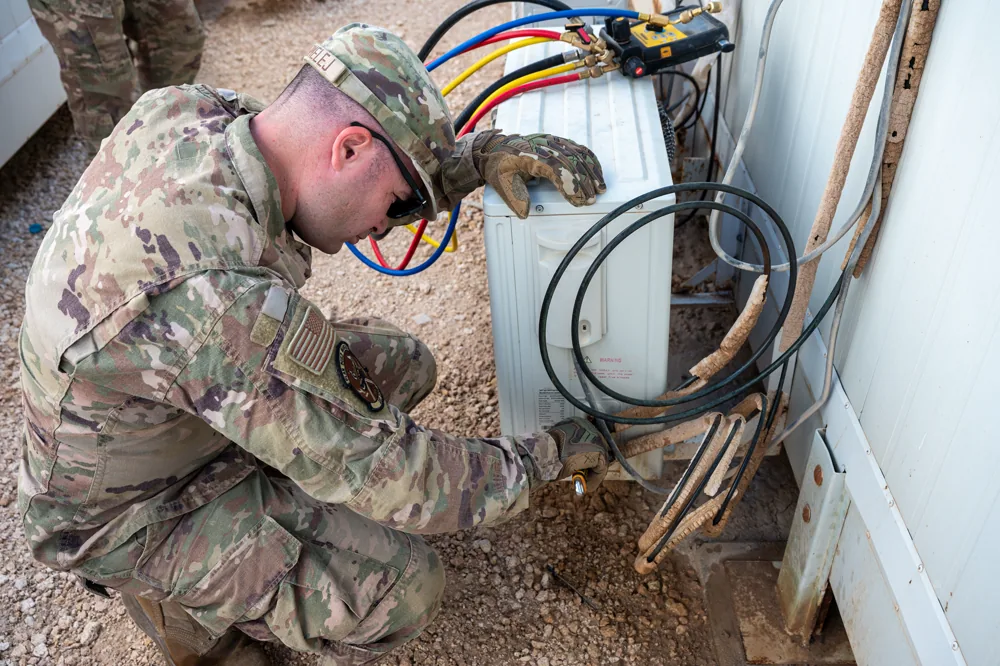
The instrument and connection belong in the same observation record.Photo: U.S. Air Force AFCENT by Senior Airman Grace Turpin · Public domain
Before comparing two vacuum readings, identify what remained connected to the gauge each time. A value on the pump side and a value at a system connection can describe different gas volumes even when they use the same unit. A timestamp and unit help, but neither identifies the measurement boundary.
Write down what the gauge was observing
Name the point, describe the isolated section and record the connections and instrument in place. Identify which valve positions define that section in the existing job record. Say whether the reading was recorded during evacuation or after isolation, and reference the method required for the equipment. The record describes what was observed with that set-up.
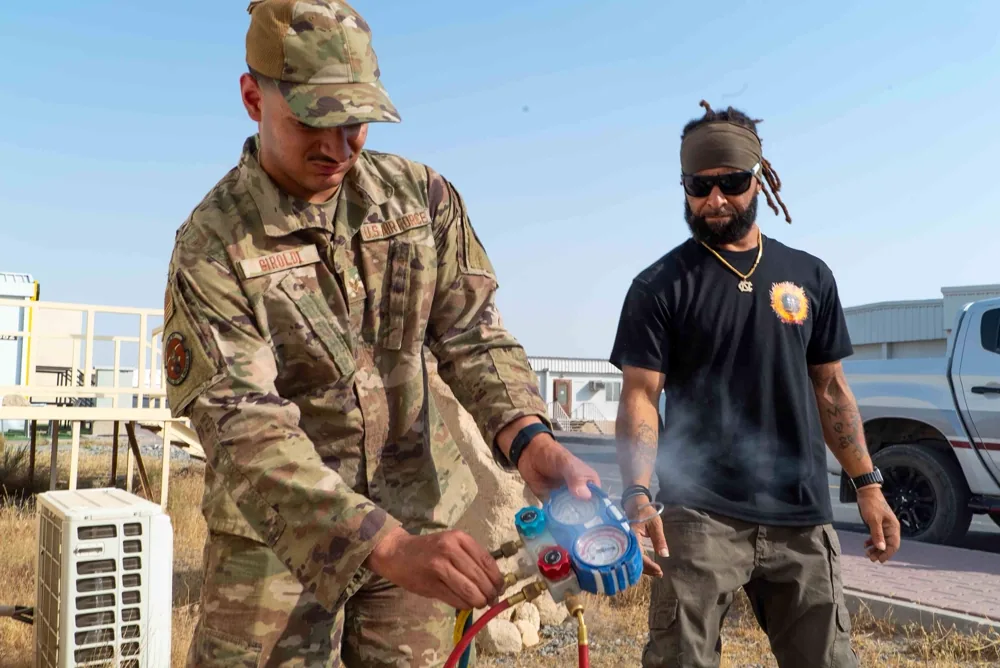
A manifold and hoses require their own documented measurement reference.Photo: U.S. Air Force photo by Senior Airman Mark Colmenares · Public domain
Put different observations side by side
A training worksheet shows “Step A: 410 µmHg, gauge at pump-side connection” and “Step B: 760 µmHg, gauge at a system-side connection”. The displayed values differ numerically by 350 µmHg. Writing “vacuum rose by 350” implies one volume was observed twice. Keep the values next to their respective gauge positions and boundaries. A unit conversion cannot make them comparable.
Keep the limits visible
Hoses, seals and the gauge can affect small isolated volumes. HVAC School discusses this influence in a bench example with a micron gauge. Temperature, gas released from materials and instrument condition can also affect what you see. Keep the relevant procedure and the instrument details with the observation, then compare only the values whose boundaries are known.
Common questions
Do the readings have to be in the same units?
Use a common absolute vacuum unit for a like-for-like comparison. Keep the original values and units.
Can I compare 410 and 760 microns if I moved the gauge between those readings?
Keep 410 and 760 µmHg as separate observations with their own measurement points. A numerical difference is possible, but it cannot describe the same boundary unless that equivalence is established.
How should I record a vacuum observation when I cannot confirm what was isolated?
Record the reading, unit, time and connection you can identify. Mark the isolated section as unconfirmed and leave a named follow-up to verify it.
How do I distinguish a reading during evacuation from one taken after isolation in a report?
Label each observation with its state and time, for example “while evacuating” or “after isolation”. State what was connected and what you know about the section being measured.